Like in many cities, there’s a divide between what are stereotypically nicer areas and rougher areas, and Dublin is no exception. Dublin’s River Liffey divides the city into North and South, with the Southside generally seen as the posher area, while the Northside is considered more working class. But, as with any stereotype, the truth is more nuanced, and there are lots of areas on the Northside that are very nice, and areas in the South that aren’t. While the North Inner City has its fair share of drugs and poverty, it can also be seen as more of the “real” Dublin, less touristy than the more famous sites South of the Liffey, yet still with some standout tourist sites of its own. One morning, I decided to do a self-guided walking tour around the North Inner City, exploring some good eats and sites. Here was my itinerary:
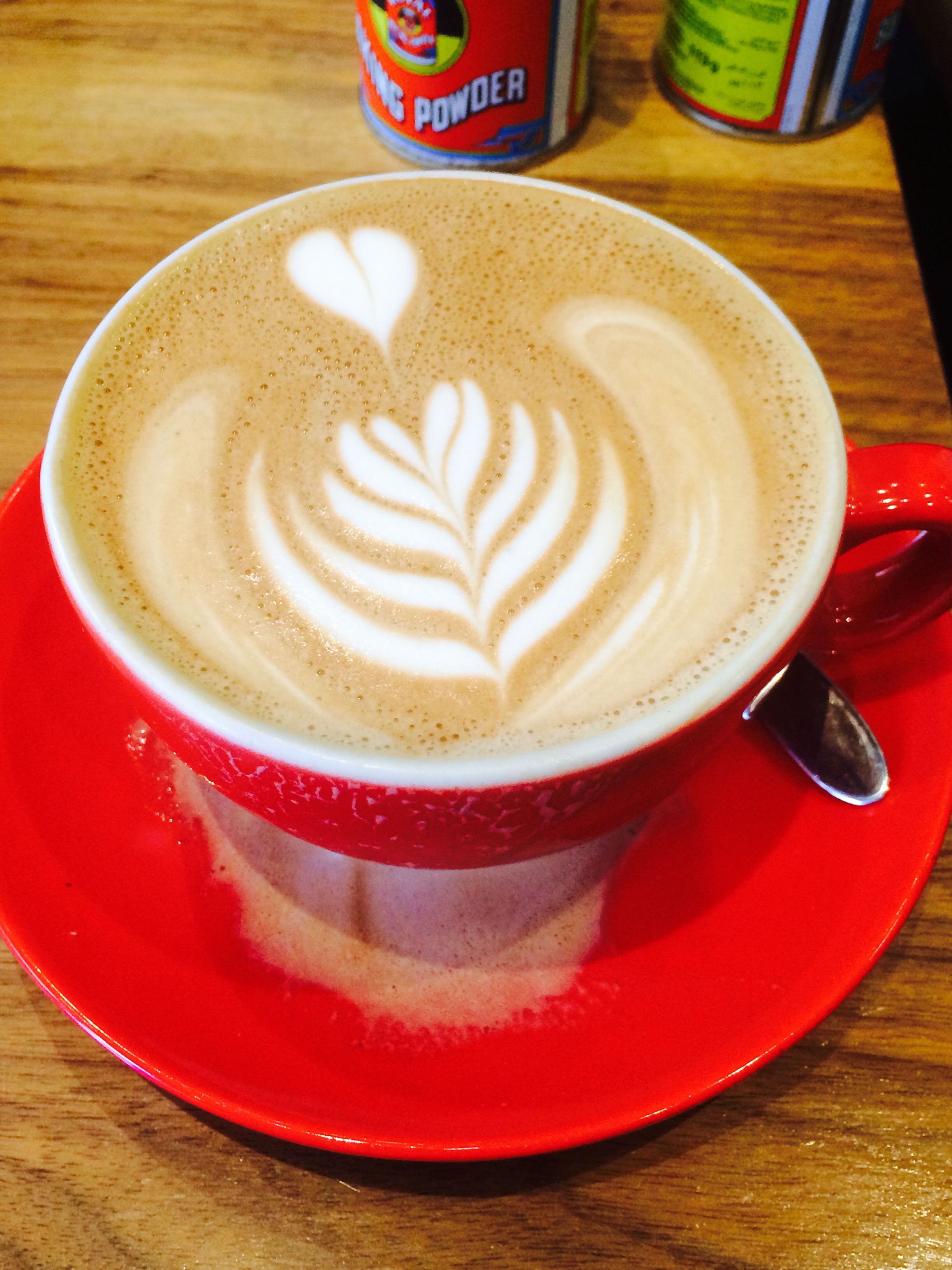
- I started my morning with a delicious latte and cinnamon roll at the Brother Hubbard cafe. With wooden benches and exposed brick walls, this hipster cafe makes great espresso drinks, pastries, and brunch/lunch.
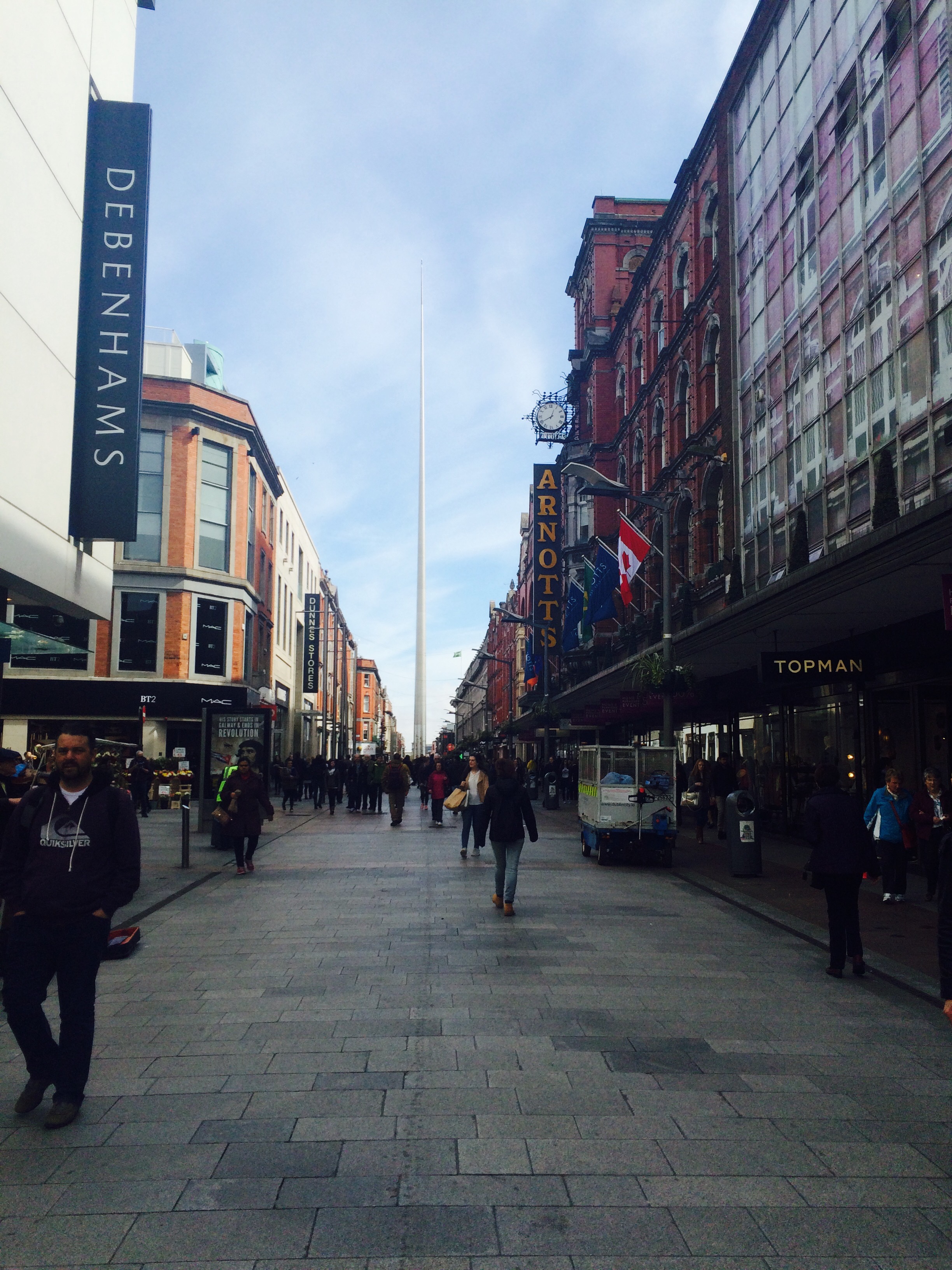
- Henry Street, a pedestrianized shopping street, is the Northside’s answer to the posher and more touristy Grafton Street. Walking down Henry Street, I passed a host of colorful characters, locals, buskers, and one of Dublin’s beloved local department stores, Arnotts (which I’d compare to a cross between Macy’s and Nordstrom). Where Henry Street meets O’Connell Street, you reach the towering Spire, a statue in the shape of a long spike that’s a popular landmark and meeting place for people. It’s the recipient of many humorous nicknames, including the “Stiletto in the Ghetto” and the “Stiffy by the Liffey,” but its ugliness kind of grows on you after awhile 😜
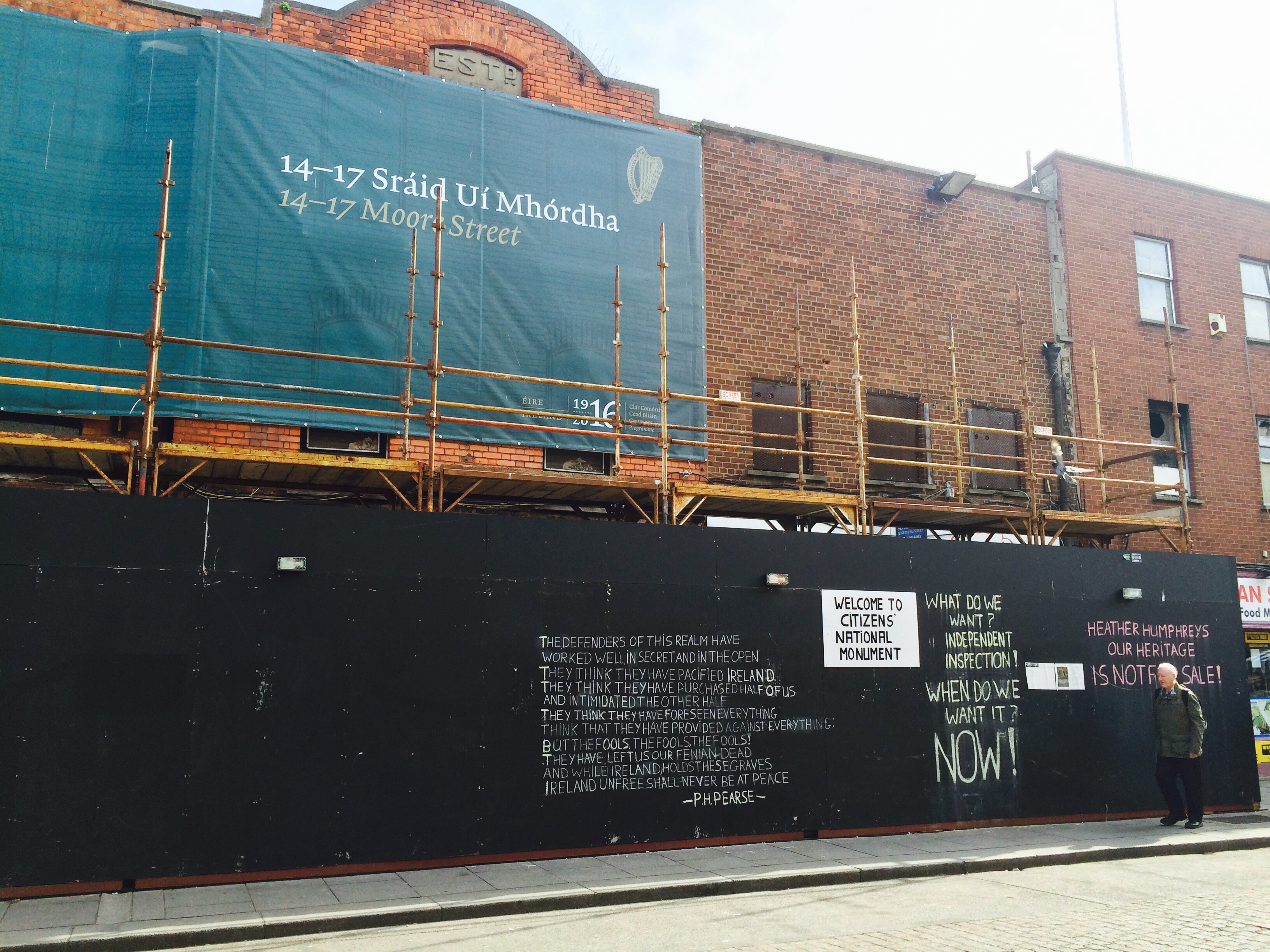
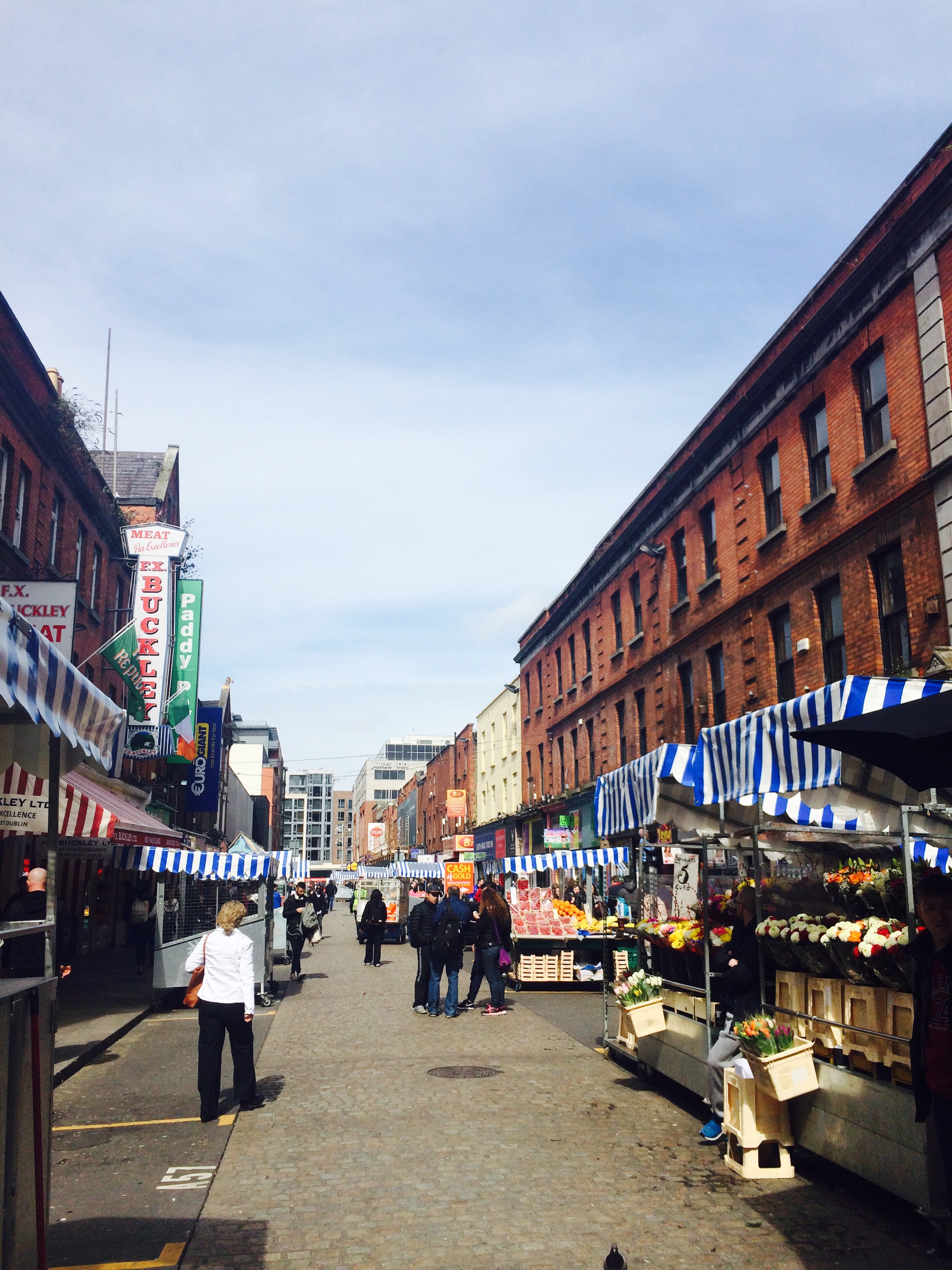
- Turning off Henry Street, I walked up the narrow Moore Street, home to an open-air fruit and vegetable market, Dublin’s oldest. Moore Street, with its distinctly working class feel, is also where 5 of the 7 signatories of the Irish Proclamation of Independence (and leaders in the 1916 Eastern Rising) eventually surrendered to the British and were later executed in Kilmainham jail. The buildings where they surrendered are now part of a controversial protest, as there are plans to tear them down and build a mall, and many protesters don’t want these historic buildings to be razed. I could see murals and writing on the buildings, such as “our heritage is not for sale”, reflecting these sentiments
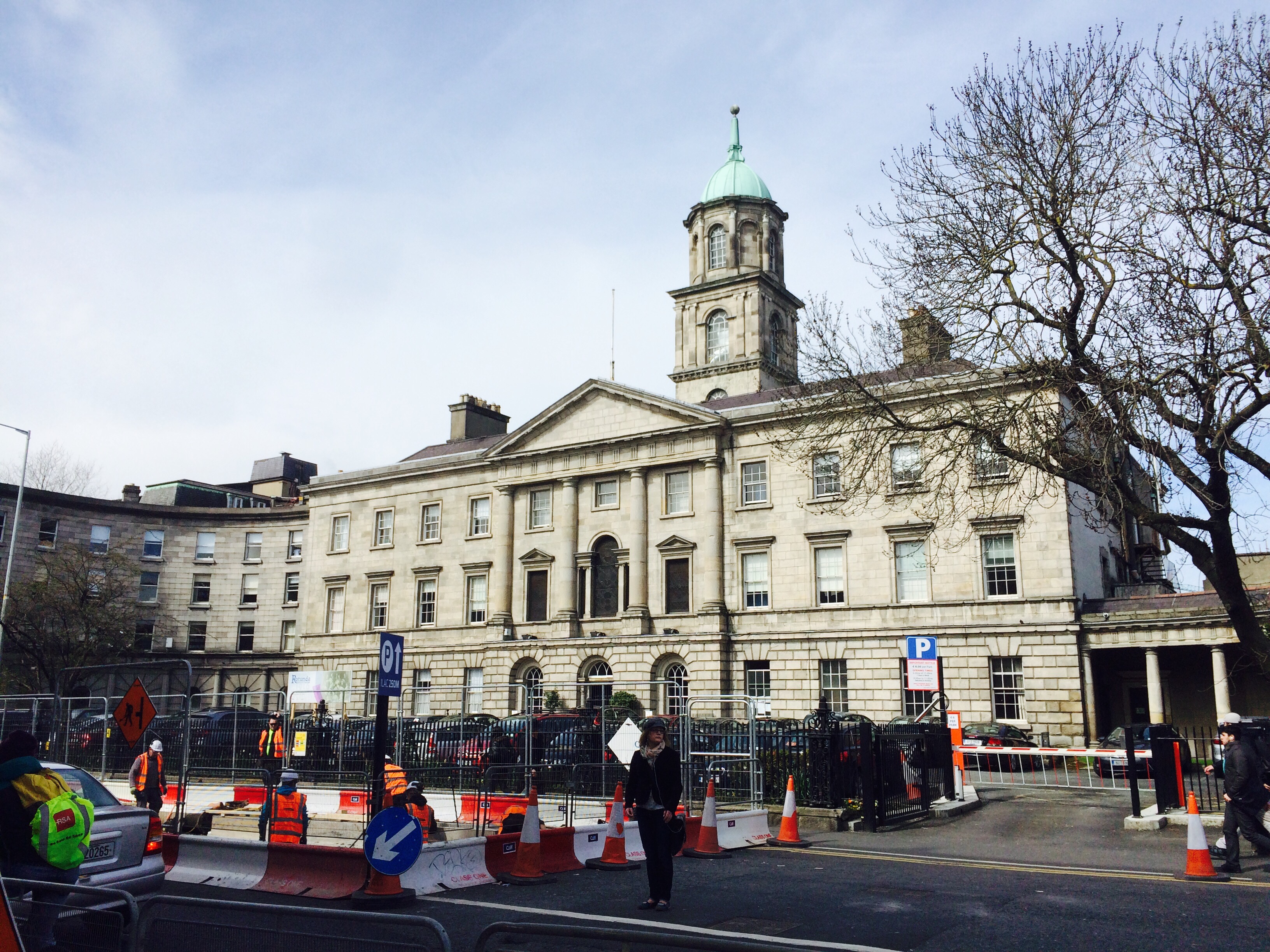
- Although the Northside is now considered more working class, back in the day (in the 1700’s) it was actually where the elite class lived, and many remnants of the beautiful Georgian architecture hint at a more glorious past. The Rotunda maternity hospital is an example of a grand Georgian building. Many of my friends on the Northside had their babies at this hospital (unlike in the States where hospitals serve a mix of medical needs, in Ireland there are designated hospitals just for giving birth). Pretty cool to give birth in this building 🙂
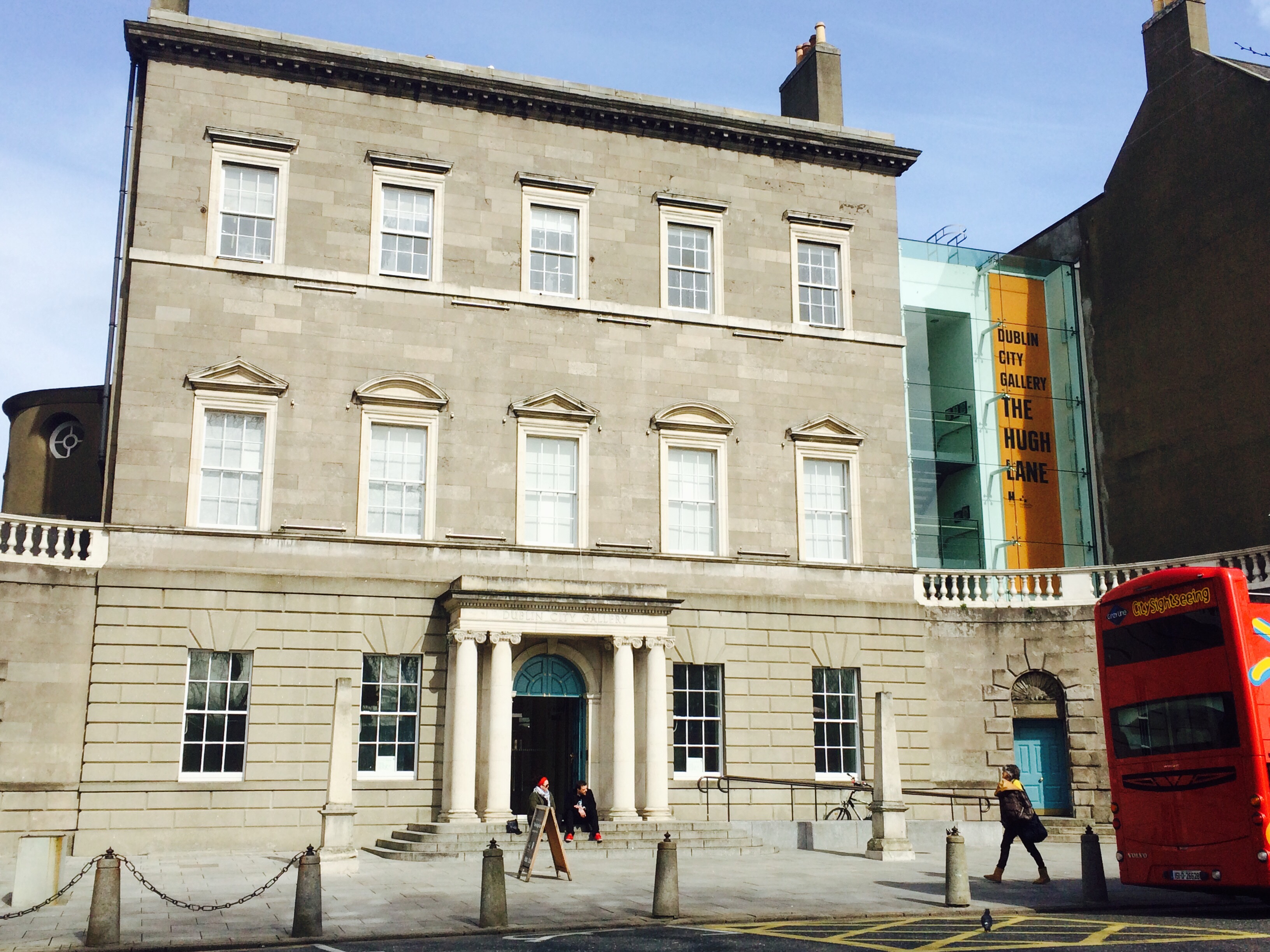
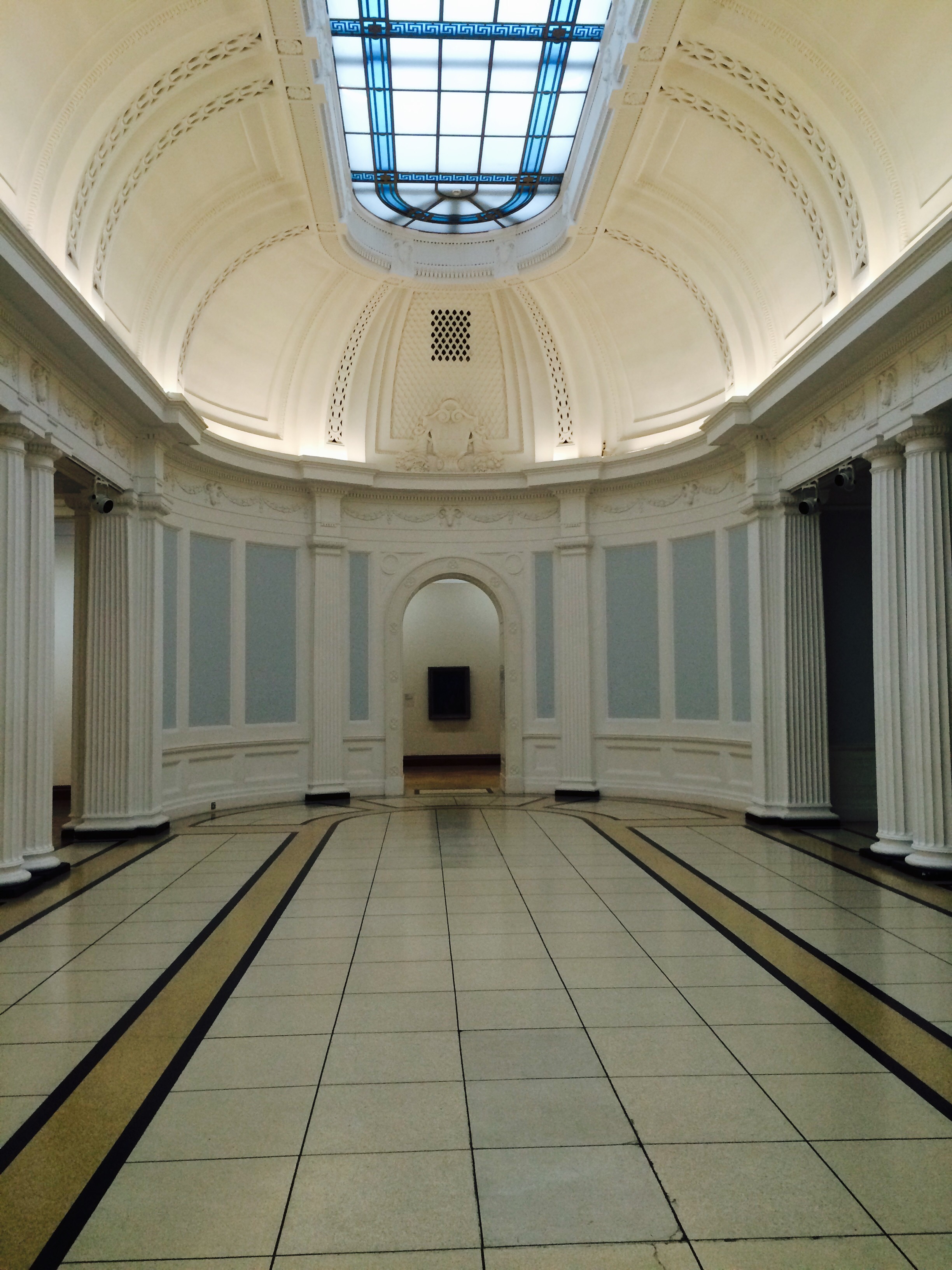
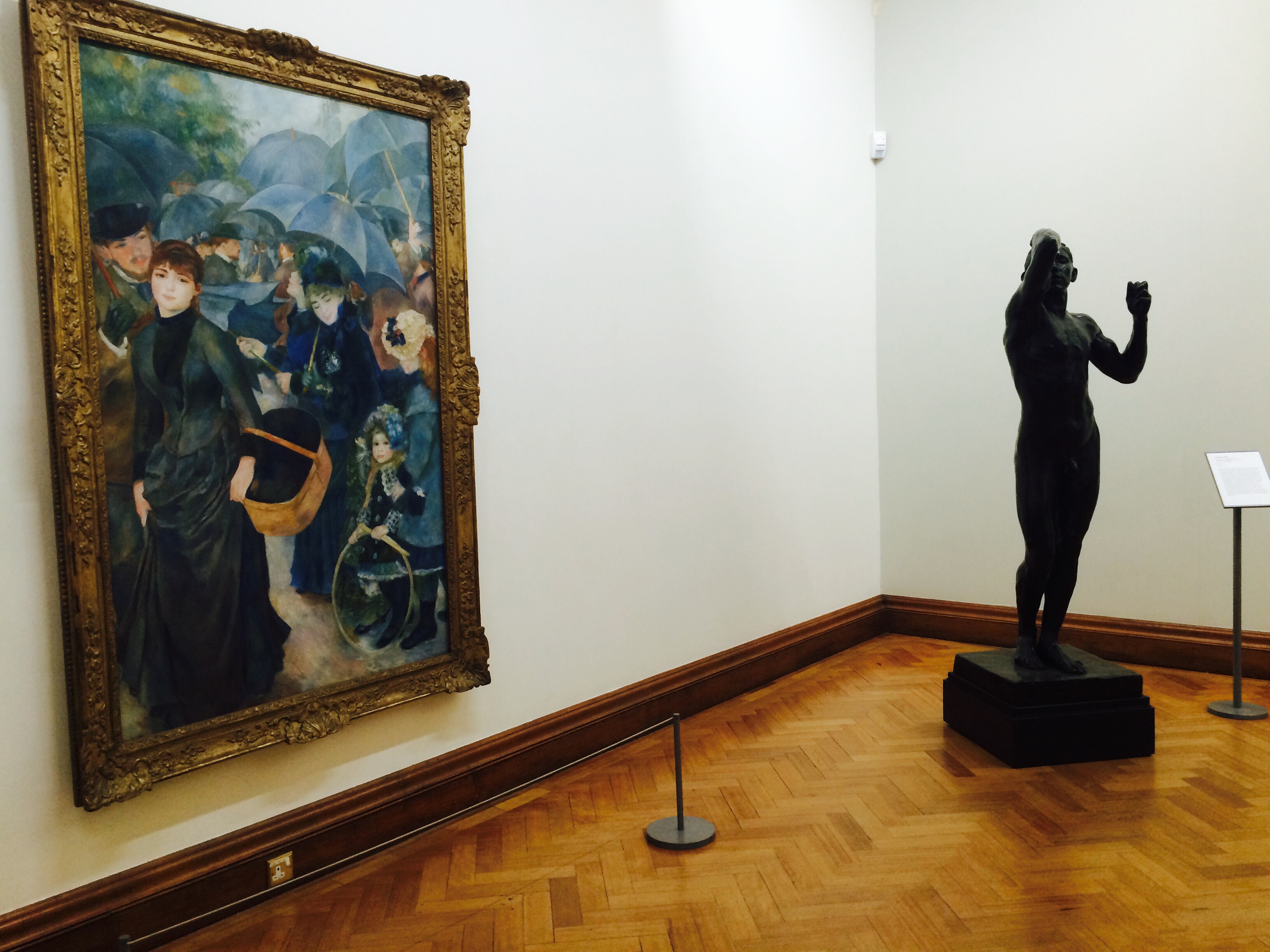
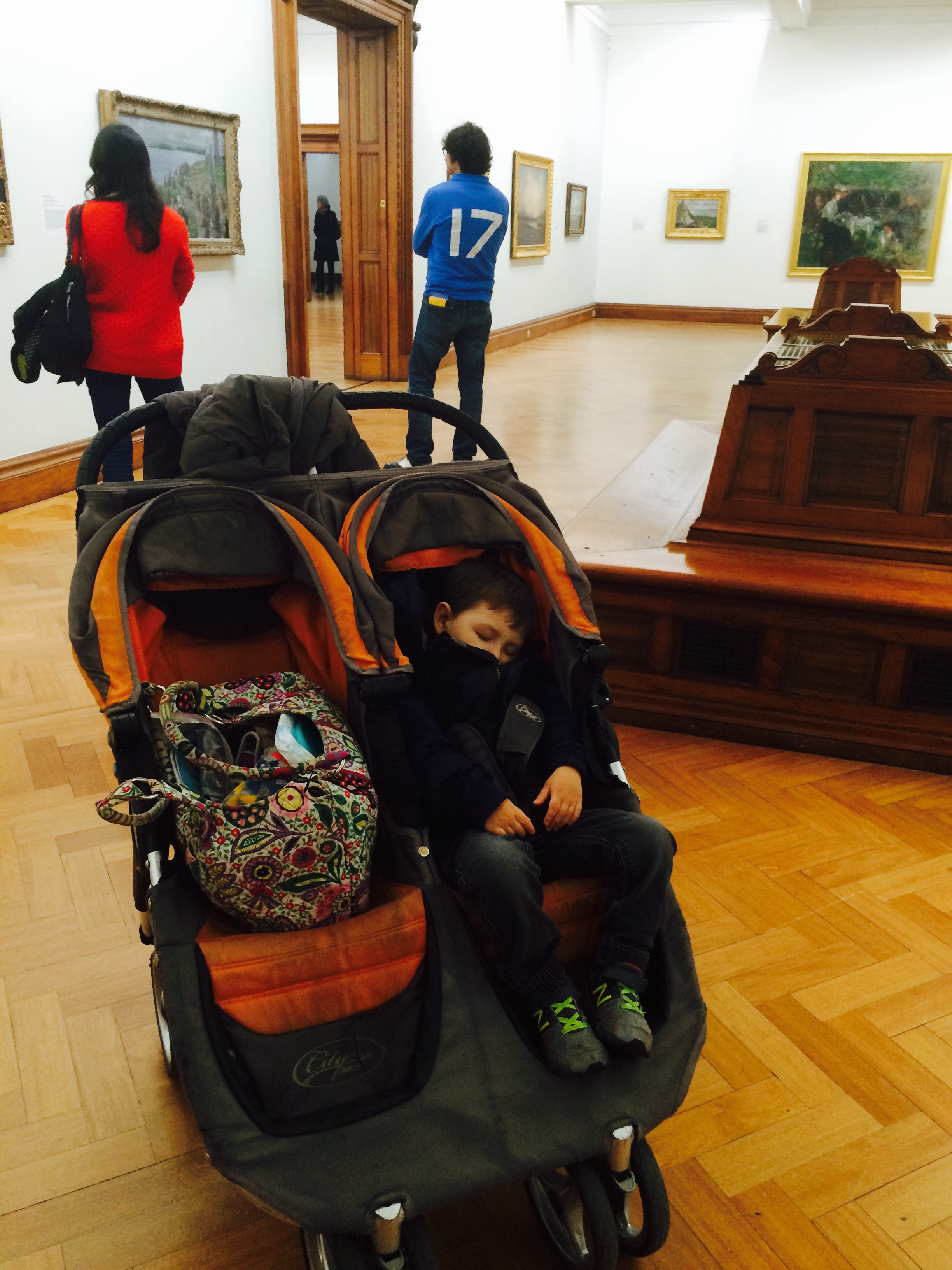
- Continuing past Rotunda Hospital, I came to the Hugh Lane Gallery, one of Dublin’s prime art museums. It houses a permanent collection, including Irish artists, famous French artists like Renoir and Manet, and others. When I visited, there was a special exhibition related to the 1916 Easter Rising, in honor of the centennial this year. Rafi found the museum a relaxing experience 🙂
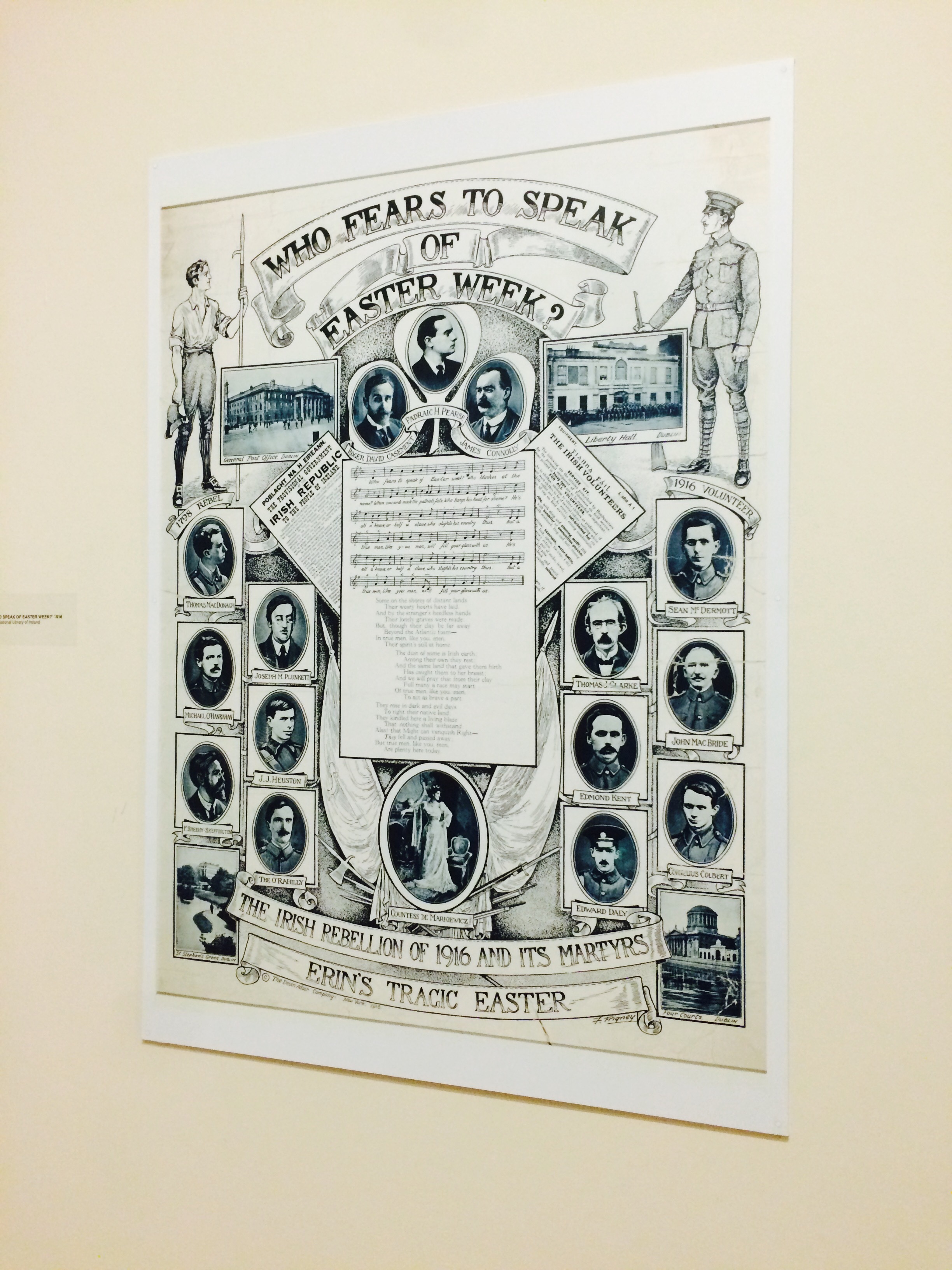
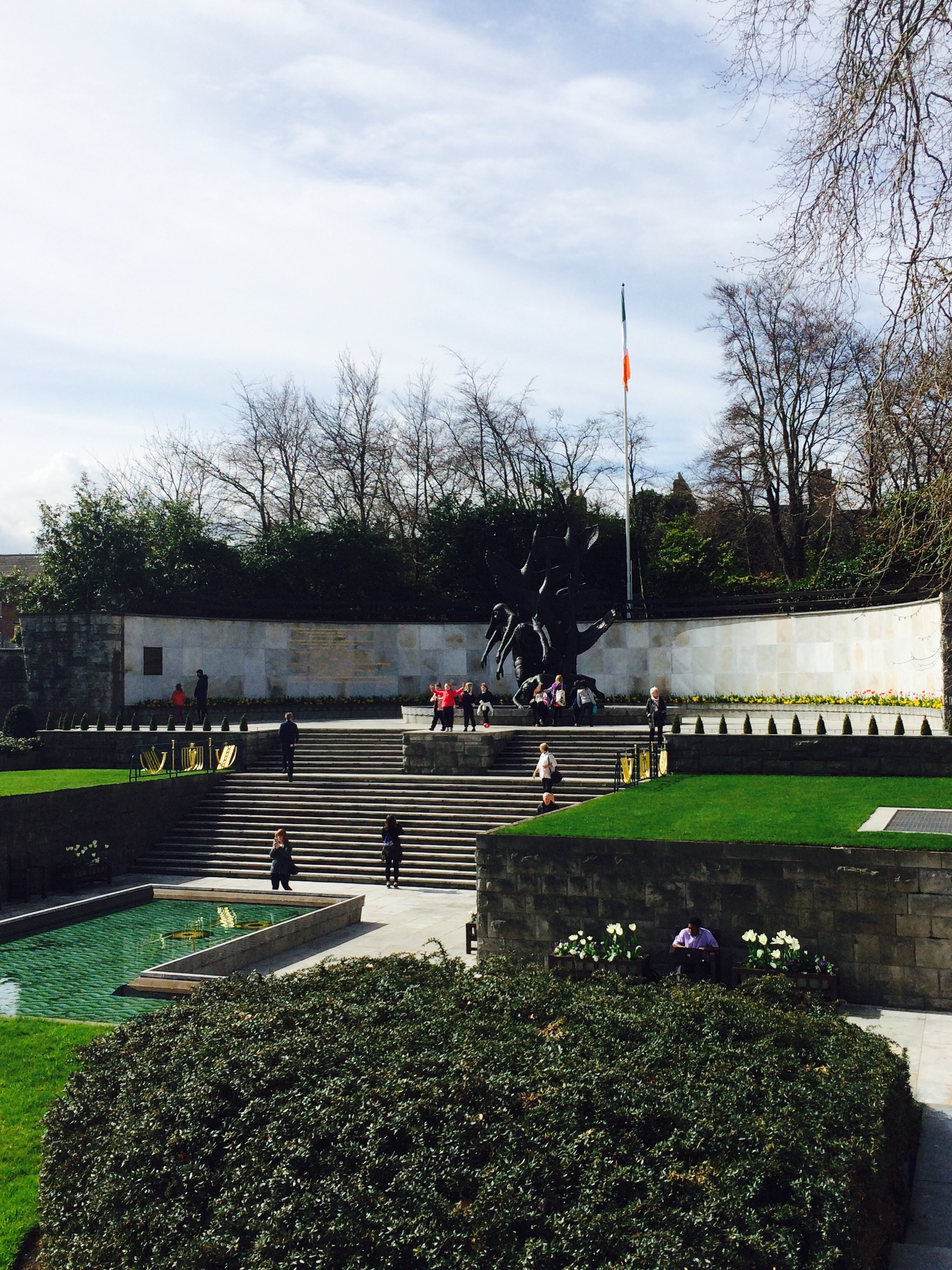
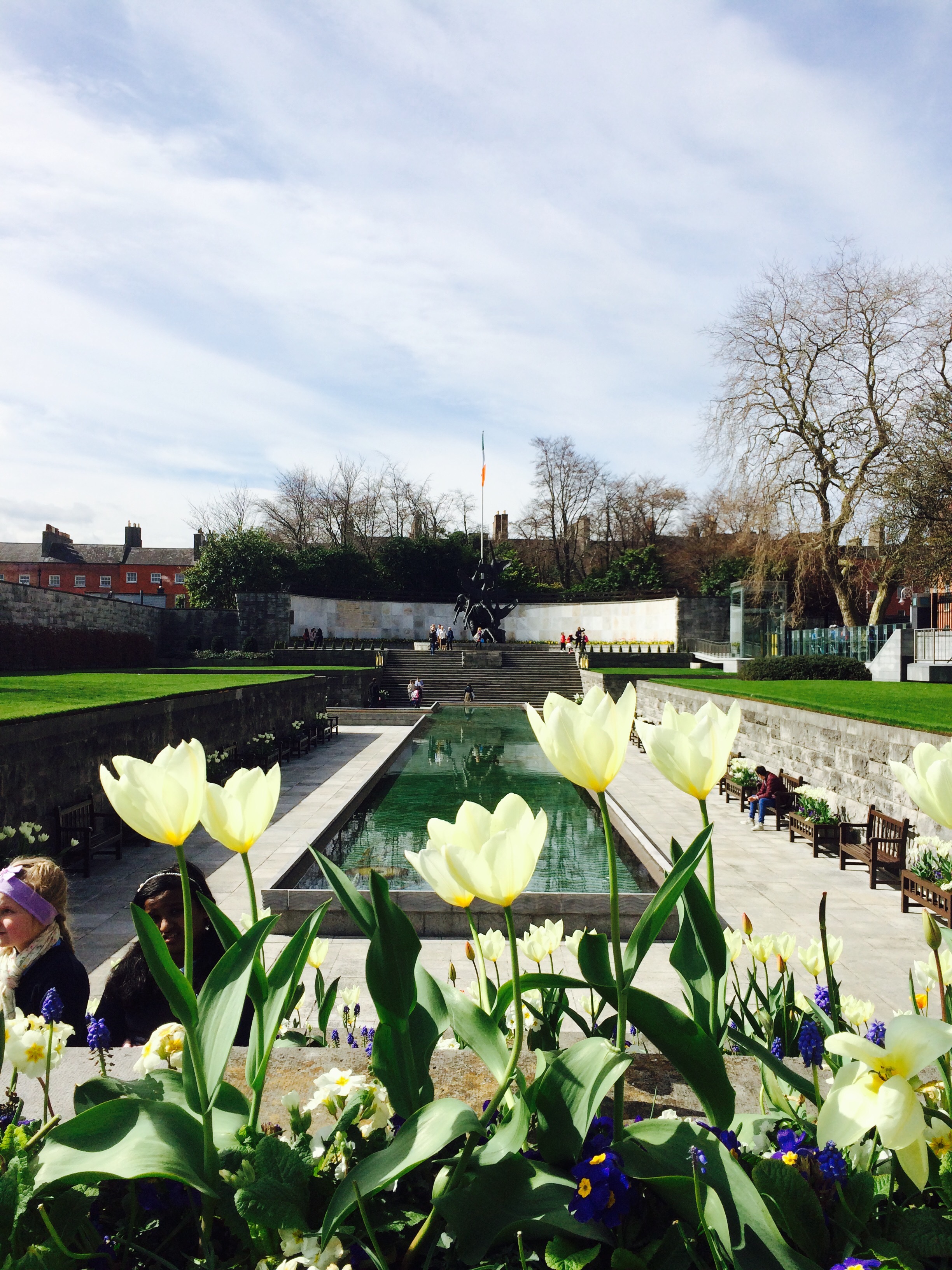
- Leaving the Hugh Lane Gallery, I passed the beautiful Abbey Presbyterian church, and crossed the street to visit the Garden of Remembrance. This memorial was built in 1966 on the 50th anniversary of the Easter Rising, in honor of the “all those who gave their lives in the cause of Irish freedom.” The reflecting pool, flowers, and statues create a serene and somber setting to memorialize those who fought for Irish independence.

- I finished up my Northside walking tour with some delicious Korean food for lunch. Right near the Garden of Remembrance, part of Parnell street is chock full of various Asian restaurants where you can grab some delicious and inexpensive food (Chinese, Japanese, Korean, Vietnamese). Hophouse/Kimchi was the restaurant I chose and had some delicious bi bim bap.
So if you ever find yourself visiting Dublin and want to explore beyond some of the typical tourist sites, consider checking out the area north of the Liffey. It’s a little grittier but with a very authentic Dublin feel, some impressive architecture, historical sites, and a wealth of hipster cafes and ethnic restaurants to sample.
 dublingers