Wow, what an interesting, intense, beautiful, and haunting place Bosnia-Herzegovina is! One of my good friends visited there several years ago, and I’ve been fascinated ever since with going there too. I knew since we would be in Croatia that it wasn’t too far of a journey to get to the cities of Sarajevo and Mostar, and I had a feeling these would be really interesting places to experience.
It’s been hard to figure out how to process or describe what it’s like there. On the one hand, Bosnia feels like a normal place like any other, with people going about their lives — and the people are so friendly and welcoming — but on the other hand the physical scars of the war in the ’90s are still quite visible. There’s a contrast between the fun vibrancy and culture of Sarajevo and the heavy weight of the past — and you feel both as you wander the city.
As you cross the border from Croatia into Bosnia-Herzegovina, you turn inland away from the gorgeous coastline, and you immediately start to feel a difference. The landscape changes and the towns are noticeably poorer and a bit rough around the edges. For awhile, we drove through flat land with fields and some vineyards, and there were numerous little roadside stands selling fresh produce and honey. But then, we reached the beginning of the mountainous region that climbs up and up toward Sarajevo. The mountains are actually part of the Alps (they’re called the Dinaric Alps) and are really beautiful. These mountains, as well as crystal clear lakes and streams, become the dominant view, with still little towns dotting the roadside. As we got into Sarajevo, there are industrial buildings, stretches of ugly Communist bloc housing, and bombed out buildings, and I had a momentary thought of “what am I doing here? Eek, I should have stayed in beautiful Croatia!” That probably sounds horrible, but I think for many travelers the first impression of Sarajevo — as a questionable place to visit — ends up changing as you delve into the city and it begins to grow on you.
Sure enough, we were welcomed so warmly by our AirBnB host, and once we began walking around the city we encountered many beautiful and interesting sites and I began to look beyond my initial impression. Bosnia-Herzegovina is often considered a point where east meets west. Since the Ottomans ruled there for many years, there is a feeling at times that you could actually be in Turkey, with the architecture, the mosques, the old bazaar, the cafes where people drink Turkish coffee or smoke hookah (water pipes). But then there are other parts of the city that retain a feel from the Austro-Hungarian years…buildings that look like they could be straight out of Vienna. Sarajevo is the meeting place of so many cultures and religions, and you can walk on one street and see a mosque, a Catholic church, an Orthodox church, and a synagogue all within a stone’s throw of each other.
In fact, we learned that it’s always been a city that prides itself on coexistence and acceptance. During the 3 year siege of the city, it wasn’t so much Sarajevans fighting each other, but rather all of them being attacked from the outside (by Serbians). From the accounts I read, most Sarajevans, regardless of their ethnic background, banded together to try to help each other through the horrible time, even if their “groups” were supposed to be hating and fighting each other. They considered themselves, first and foremost, Sarajevans — sharing a common bond of their city — rather than Muslims, Catholics, or Christians.
It’s strange to be a tourist in a place where you remember hearing about war — even though I didn’t really understand the conflict as a child/teenager, it definitely seeps into your consciousness hearing about it on the news, and it becomes a place you associate with tragedy, even though there is so much more that defines it. I felt I had a lot of background research to do now as an adult to try to uncover a bit about what the conflict was about.
Obviously, it was a very complex situation with lots of sides/perspectives, but from what I could gather, a basic summary is as follows: Yugoslavia was formed by dictator Tito after WWII and the goal was to create order and sameness (through communism) after the chaos of WWII. Different religions, ethnicities, and territories were all merged together into one country, and nationalism/identifying with your group was discouraged. But when Tito died in 1980, a new leader never emerged that could continue the “unity” (however forced it may have been) of Yugoslavia. Groups began to become more divided and want independence for their own ethnicities. With the fall of communism, some of the states (first Slovenia and Croatia, and later Bosnia-Herzegovina and Kosovo) began declaring their independence from Yugoslavia. The Serbs (mostly Orthodox Christian) wanted to retain the larger Yugoslavia and they began attacking Croats (Catholic) and Bosniaks (Muslim). In addition, the Croats and Bosniaks started as allies, but then started fighting each other, particularly in the city of Mostar. So it was a complex war over identity, borders, religion, ethnicity, and politics, and there was horrific ethnic cleansing and genocide.
Sarajevo was under siege for over 3 years (the longest siege of a city in modern history). Snipers fired and launched rockets down on the city, which is in a valley, from the hills surrounding it. There was no way in or out of the city, except for a secret tunnel running under the airport. Today, 20 years after the siege ended, many of the buildings are still pock marked with bullet and mortar holes. Other buildings are just completely bombed out, with just the shell remaining. When you look up into the hillsides of Sarajevo, you see lots of white headstones. During the siege, the cemeteries ran out of room, so people made graves wherever they could…in parks, behind houses, etc. A block from where we were staying there’s a vibrant fresh produce market. It would seem like any other market except for the large plaque in the back marking the memory of the many victims of a large bombing that happened there. It was actually bombed twice, and after the second time — with so many civilians killed at once — there was finally pressure to come to the negotiating table and the various sides signed the Dayton Peace Accord shortly thereafter.
There are also several important bridges in Sarajevo which witnessed tragedy and violence at different times. One of them is where Franz Ferdinand, the heir to the Austro-Hungarian empire, was assassinated in 1914. This event sparked the beginning of World War I, so right around that bridge is a museum with a lot of history and information about WWI.
Another bridge, the Vrbana Bridge, also saw a lot of tragedy. Before the siege began, a gathering of Sarajevans was staging a peaceful protest and as they reached Vrbana Bridge, snipers fired down and two young women were killed — they are considered the first victims of the conflict and the bridge was later renamed for them. Also on this bridge, two young lovers from opposite “sides” (one Serb and one Bosniak) tried to escape to “freedom” on the Serb side of the city. Although they had friends in high up places on both sides who had agreed not to fire at a specific time so they could cross to the other side, the agreement wasn’t upheld and the young man and woman were shot on Vrbana Bridge. They were referred to as the “Romeo and Juliet” of Sarajevo.
Whew! There was so much that is heartbreaking and depressing about the city, but there is also clearly a sense of the people trying to overcome this sad history and restore life and vibrancy to their city. People are out on the streets taking leisurely strolls, sitting in parks, and whiling away hours in the many cafes. There were tons and tons of places to get coffee and sit and people watch. There are museums, cultural performances, and everything that makes a city “normal.” The food was delicious (and inexpensive!)…fresh vegetables and cheeses, warm pita-like bread, a special meat dish called cevapcipi (which Jeff tried and liked), baklava, and more. The day we were there we hiked up one of the huge hills in the city (we didn’t realize quite how far it was) up to a restaurant with an amazing view and delicious food. Despite the difficult past, it was a really interesting and beautiful-in-its-own-way city, and I’m definitely glad we got to see it firsthand! Here are some photos:
-
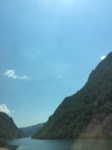
- Driving through the Bosnian countryside
-
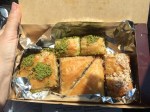
- Delicious baklava from Sarajevo
-
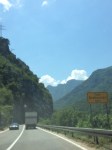
- The mountainous roads between Sarajevo and Mostar
-
- The highlight of Isaac’s time in Sarajevo was the “bunk bed” (actually a loft bed) in the apartment we stayed in
-
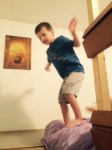
- Isaac playing in the loft
-
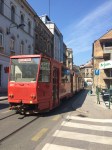
- An old style tram in Sarajevo
-

- Liberation square, a popular gathering spot in Sarajevo
-
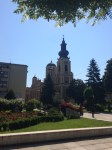
- The largest Orthodox church in Sarajevo, as seen from Liberation Square
-
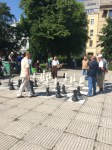
- Old men play chess in Liberation Square
-
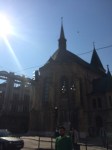
- The Catholic church just several blocks from the Orthodox church
-

- The Jewish quarter in Sarajevo
-
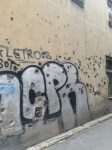
- This was the building next door to the apartment we stayed in, still covered in bullet holes
-
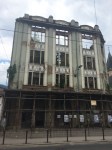
- A bombed out building on one of the main streets in Sarajevo
-
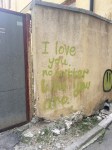
- “I love you no matter who you are,” an important message in Sarajevo
-
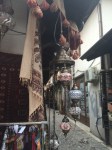
- Some cool lamps in the Sarajevo bazaar
-
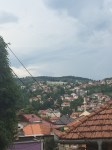
- A view into the Sarajevo hills…in the distance you can see a bunch of white graves
-
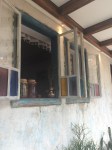
- Cool windows at the restaurant we ate lunch at
-

- Windows
-
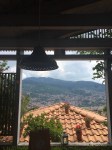
- View from lunch at Kod Kibeta, a delicious restaurant atop a hill in Sarajevo
-
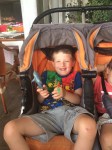
- Isaac smiling
-
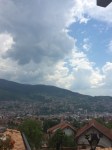
- View of Sarajevo from lunch
-
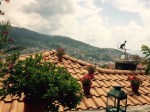
- Rooftop view
-

- The open-air patio at Kod Kibeta restaurant
-
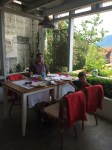
- Jeff and Isaac at lunch
-
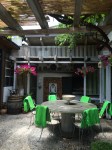
- The lovely patio at Kod Kibeta, which served traditional Bosnian food
-
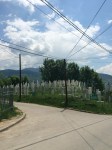
- White grave markers like these dot the hillsides of Sarajevo — the dates are almost all 1992-1995
-
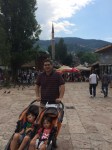
- The boys in Sebilj square, also known as “pigeon square”
-

- Chasing pigeons in pigeon square
-
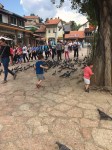
- The aptly named pigeon square
-
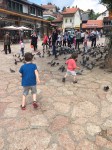
- Pigeon square…a popular meeting spot in Sarajevo
-
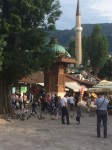
- The main public fountain (sebilj) located in Sebilj square. This is the start of the Ottoman-feeling area of town
-
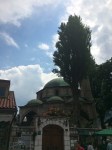
- Marketplace mosque
-
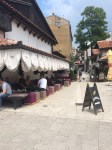
- People enjoying the cafes of Sarajevo
-
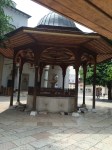
- Courtyard of a mosque
-
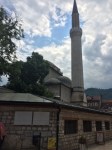
- Gasi Husrev Begova Mosque
-
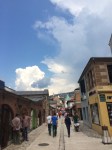
- Street scene in the old town of Sarajevo
-
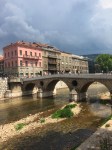
- Princip’s bridge, where Archduke Franz Ferdinand was assassinated, sparking the beginning of WWI
-
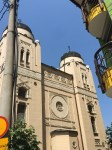
- The Ashkenazi synagogue, built in 1902
-
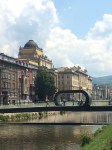
- An interesting bridge
-
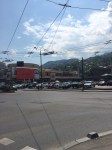
- Skenderija Mall, which was the media complex for the 1984 Olympics, hosted in Sarajevo. It’s now a mall with modern shops.
-
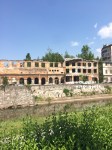
- Bombed out buildings along the river
-
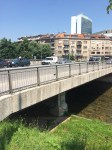
- Vrbana bridge
-
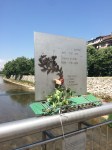
- A plaque on Vrbana bridge commemorating the first victims of the conflict, shot during a peaceful protest
-
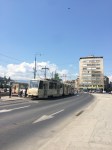
- Communist style tram and building
-
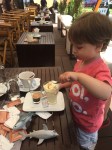
- Enjoying delicious coffee at a Sarajevo cafe called Spazzio. Rafi sampled the ice cream of my affogato (coffee with ice cream) drink
-
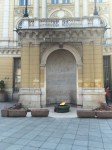
- Eternal flame — commemorating the partisans who gave their lives liberating Sarajevo from the fascists during WWII
-
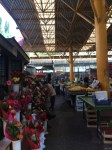
- Markale market, the bustling market bombed during the conflict
-
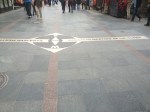
- Sarajevo, “where east meets west”…this is the spot in town where the architecture changes from Ottoman style to Austrian style
-
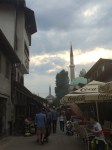
- Minarets in the old town area
-
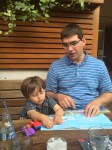
- Dinner outside
-
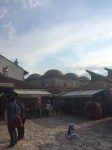
- Walking through the old town area (called Bascarija), with its many vendors and craftspeople
-
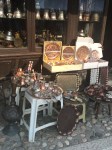
- Many craftspeople have been making metalwork, rugs, and all kinds of crafts for generations
-

- Sebilj square mosque
-
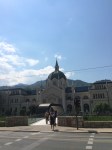
- Arts academy of Sarajevo
-
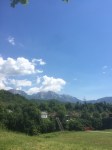
- Mountains in Bosnia-Herzegovina
-

- Stopping for a quick picnic on the way to Sarajevo
-
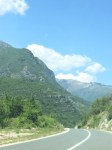
- The Dinaric Alps in Bosnia-Herzegovina
The other city we visited in Bosnia-Herzegovina was Mostar. We spent a lovely afternoon walking the old cobblestone streets, strolling through the bazaar, and crossing the famous Mostar bridge. It was very hot in Mostar and had been a long day, so we didn’t do too much, but did grab some coffee and gelato at a cafe and then had dinner at a traditional Bosnian restaurant.
Mostar is even more Turkish feeling than Sarajevo, with its mosques from which you can hear the call to prayer, the architecture, and the famous bridge built in the 1500s by the Ottomans. The bridge arches across the river and has long been a symbol of the city and of Bosnia-Herzegovina in general. It was all the more tragic, then, that it was bombed during the conflict, but luckily restoration of the bridge was completed in 2004 with a triumphant celebration of music, fireworks, and visiting dignitaries from around the world including Prince Charles. Although Mostar’s residents (Catholics and Muslims) are still largely divided along ethnic lines and live separate lives, the bridge nonetheless is a unifying symbol of the city which all residents take pride in, and its reconstruction was a small step toward healing.
We also got a kick out of the hotel we stayed at in Mostar! It was actually part of a museum, housed in a traditional Ottoman residence and decorated in the traditional style. We got to tour the museum and courtyard and sleep in a room with Turkish style rugs, high wooden ceilings, and a canopy bed, all overlooking a beautiful courtyard. It was a cool experience — a true “night at the museum.”
-
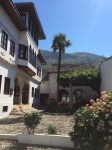
- In the courtyard of Muslibegovic House (the hotel/museum where we stayed)
-
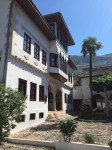
- View of the museum/hotel
-
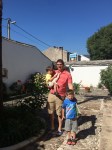
- Beautiful courtyard
-
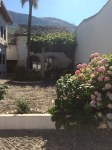
- Courtyard of the hotel/museum
-
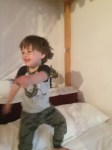
- Rafi playing on the canopy bed
-
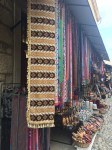
- The bazaar in Mostar
-
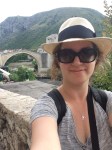
- Ilana with the Mostar Bridge in the background
-
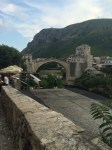
- The famous Mostar Bridge. Many times you can see people jumping off of it into the river for a swim, but we didn’t see any
-
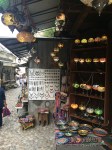
- Crafts in the bazaar
-
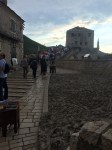
- About to walk up the bridge…it’s pretty steep
-
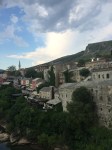
- View of Mostar from the bridge
-
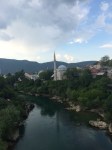
- View of the river and a mosque
-
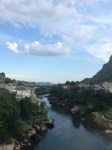
- View of the river from the bridge
-
- Dinner at a traditional Bosnian restaurant
-
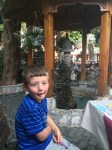
- Isaac at dinner
-
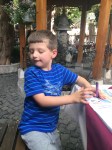
- Coloring at dinner
-
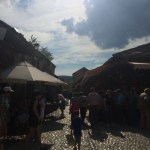
- Strolling the cobblestone streets of Mostar
-
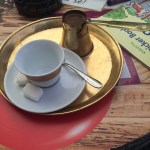
- Drinking traditional Bosnian coffee (which is similar to Turkish coffee)
-
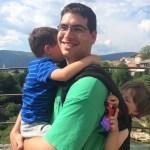
- The boys on Mostar Bridge
-
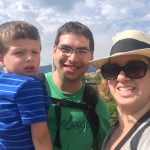
- Our family (Rafi in the backpack)
-
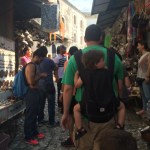
- Wandering the bazaar
-

- Isaac checking out some trinkets
-
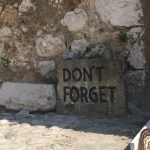
- A reminder not to forget the war of the 1990s
-
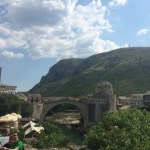
- Beautiful Mostar Bridge
-
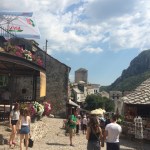
- Walking through Mostar
-
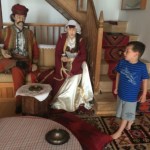
- Touring the museum that was part of our hotel
-
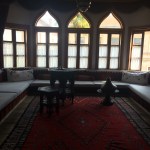
- A traditional Ottoman sitting room in our museum/hotel
-
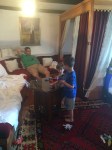
- Inside our hotel room…very unique!
-

- Being welcomed in the courtyard of the hotel
-

- Getting ready to enjoy a welcome drink upon arrival at the hotel
 dublingers