During my parents’ visit, we had a wonderful weekend all together up in Belfast, Northern Ireland. Belfast is about a 2 hour drive north of Dublin, but in many ways feels like a different world. It is a different country (though there’s no border crossing) — part of the UK, with different currency and a very interesting and troubled history, which we had the chance to learn a bit about during our stay.
Once lumped with Beirut, Bosnia, and Baghdad among the 4 “B’s” to avoid visiting, Belfast has come a long way from the violence and bombs of its sectarian conflict known as “the Troubles” (though as we learned, the conflict isn’t truly over). But Belfast has gone for a big revival, with museums, a great dining scene, and arts and culture events that all draw visitors and have helped re-image the city. Even “the Troubles” themselves have become something of a tourist industry, with tours of the Catholic and Protestant neighborhoods being one of the top tourist things to do in Belfast. There’s just so much to write about Belfast — I found it really fascinating and I was really glad we got to visit!
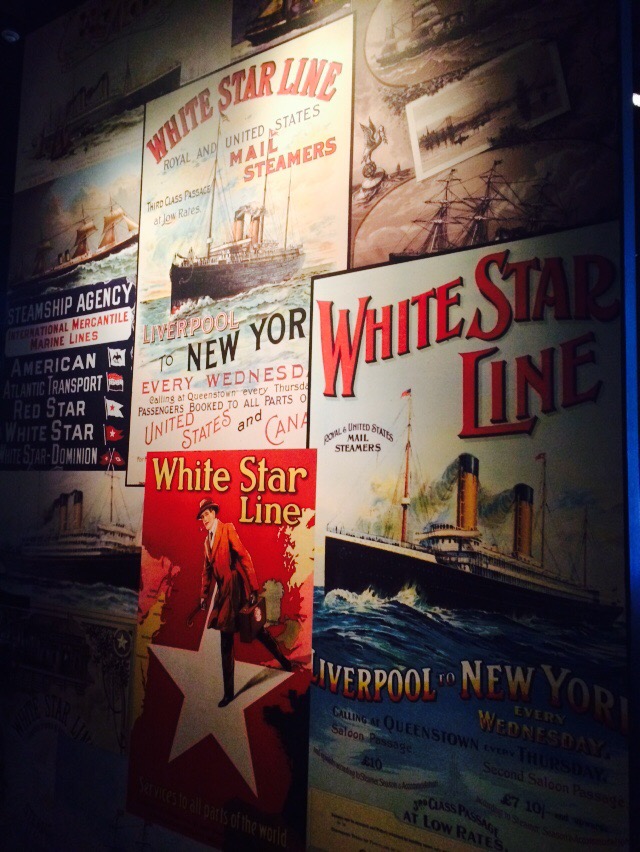
When we arrived into town, our first stop was the Titanic museum, which opened in 2012. The Titanic was built in Belfast and launched from there before stopping in England, France, and its last port of call in Southern Ireland before its fateful end. Belfast locals are proud of the Titanic’s history in their city but will be quick to remind you “it was working when it left here.” The museum is a stunning facility, with the outside designed of metal in a somewhat abstract representation of the ship. The exhibit is extremely interesting — taking you through the history of Belfast as an industrial powerhouse for both shipbuilding and linen, and on to the building of the Titanic (and its sister ships the Brittanic and the Olympic), to the crash and sinking, and finally to the discovery and salvaging of the ship from under the sea.
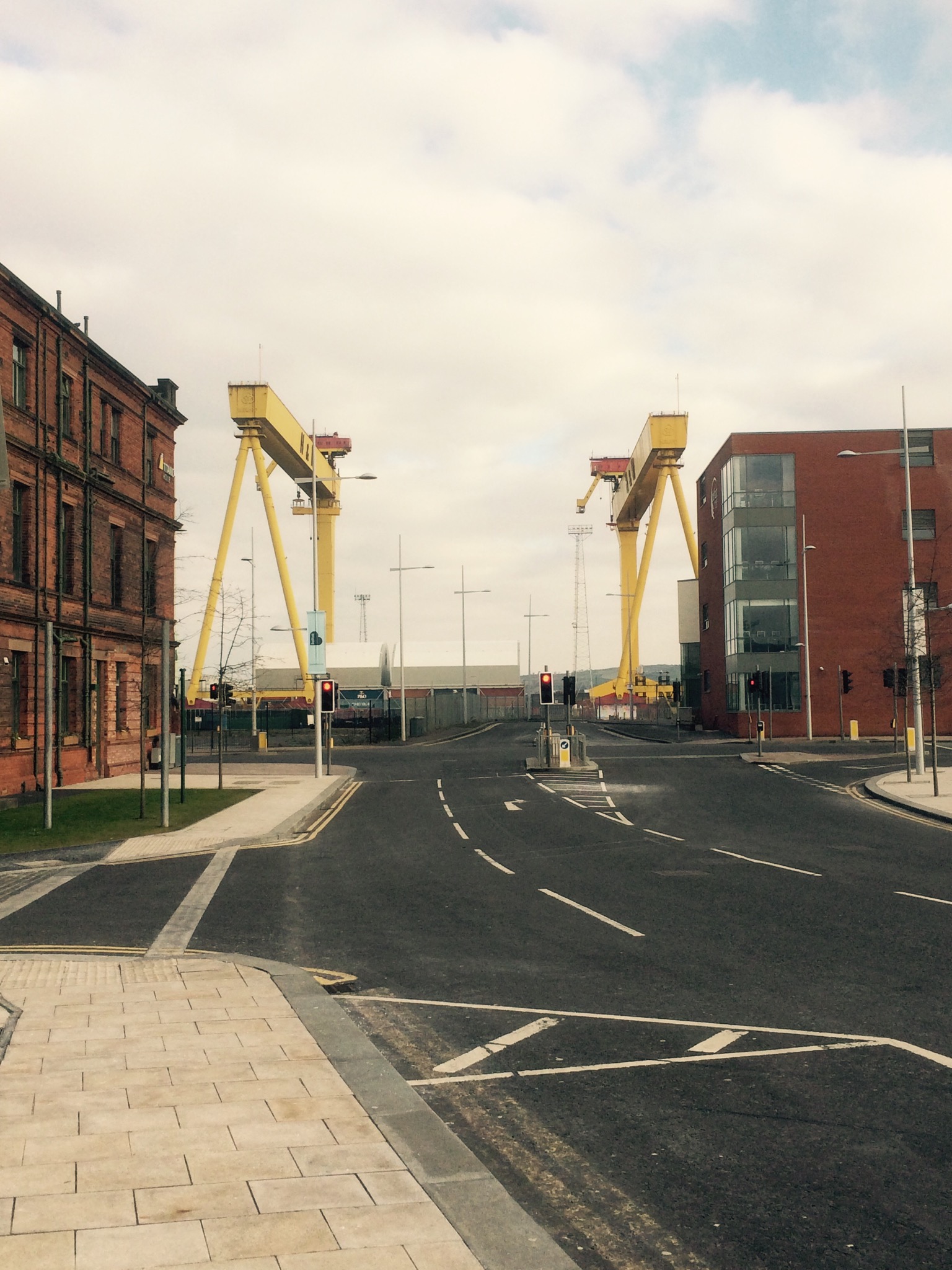
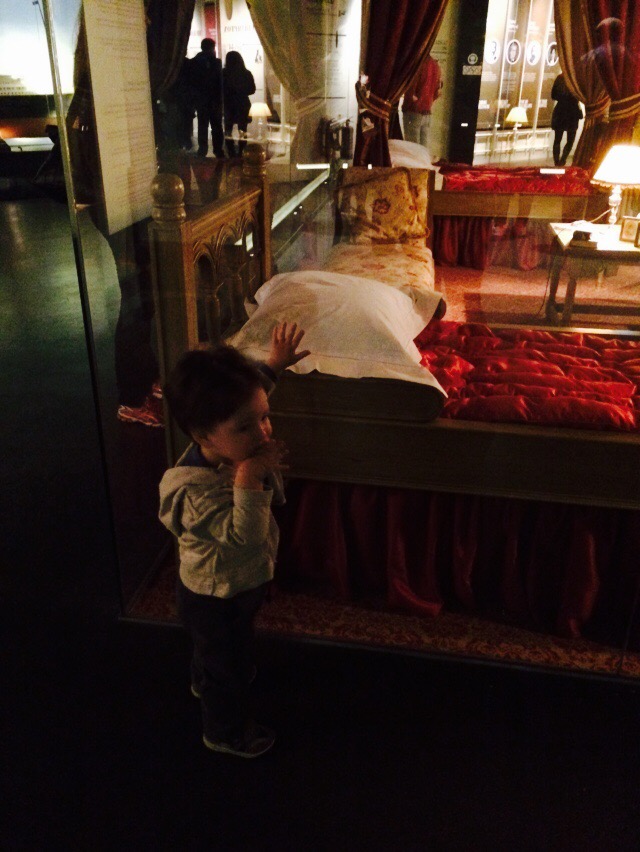
We found the museum to be really well thought out and interactive — great audio visual displays, photographs and objects, and even a Disneyland style ride (Isaac’s favorite part :)) that takes you through a “shipyard” to get the feel of what the workers building Titanic went through. I learned a lot of interesting tidbits, but the thing that struck me the most was the “perfect storm” of conditions that led to the Titanic sinking: the crew ignoring other ships’ warnings of ice, the many lifeboats that had been removed to make room for more extravagant quarters for the wealthy, and other factors as well. Despite the tragedy of the Titanic, Belfast (and the company that built Titanic) continued to be a ship building powerhouse for many years after. You can even still see the two huge yellow cranes that built Titanic, which are still a fixture on the waterfront in Belfast.



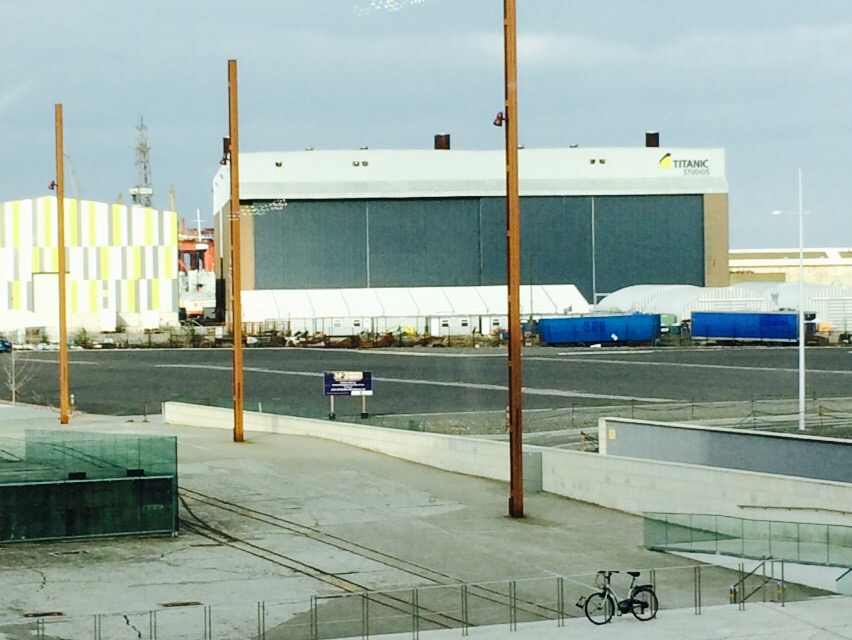
A view of the museum from across the harbor

Here is the Titanic studio (near the museum) where Game of Thrones is filmed. (Apparently much of Game of Thrones is filmed in Northern Ireland, including outside scenes in the beautiful countryside and inside scenes in this Belfast studio, so there is a decent Game of Thrones tourism industry revitalizing Belfast, too).
After touring Titanic, grabbing an early dinner at a delicious restaurant called Deane’s (which was a little fancier and less kid-friendly than we’d realized, but oh well), we all turned in early for our busy day ahead.
The next day, Sunday, was actually Mother’s Day in Ireland and the UK. We hadn’t known this until a week or so before, but it was a great coincidence that my parents were here and that I could celebrate with my mom. My dad and Isaac surprised my mom and me with very sweet cards and some sets of lotions and soaps. We ate a yummy, hearty Irish breakfast in the hotel and opened our cards and presents.

Then we set off for our “Troubles” tour, also known as a “black cab tour.” (Many people take taxis, which are often the traditional black cab types you see in London, to go on these tours, hence the name. We needed a slightly larger car so we took a van taxi instead of an actual “black cab”). Our driver picked us up at the hotel, gave us an overview of some of the history and what we would see, and then off we went to see the very separate Protestant and Catholic neighborhoods that had seen the most conflict over the years, as well as the peace wall.
I have to admit, I didn’t know a lot about the conflict in Northern Ireland before coming to live in Ireland (in fact, I don’t think I even fully appreciated the difference between Northern Ireland and the Republic of Ireland). I knew it was violence between Catholics and Protestants but I didn’t quite understand why or what that meant. We learned that even more than a religious conflict, the fighting is essentially political and a question of national identity: the Loyalist/unionist side (who are mostly Protestant) consider themselves British and wish to remain loyal to the United Kingdom, and the Republican/nationalist side (mostly Catholic) that wishes for Northern Ireland to join the Republic of Ireland and be free from Britain.
In 1969, the “Troubles” broke out — what began as a civil rights movement to try to end ongoing discrimination against Catholics, was perceived by the unionist government as a threat and potential Irish republican uprising. Violence erupted on both sides, with the British army and police force, as well as Protestant paramilitary groups, fighting with Catholic paramilitary groups like the IRA. After 3 decades of violence, a shaky peace treaty was reached and the Troubles are said to have officially ended on Good Friday, 1998. In reality, though, the tension is still extremely high between the two sides and bouts of violence still break out frequently. There’s still almost complete segregation between Catholics and Protestants — a person from one background would rarely go into a neighborhood of the other side (though our guide told us that people from both sides could meet in downtown Belfast which is considered neutral territory, but would then go back their separate ways).
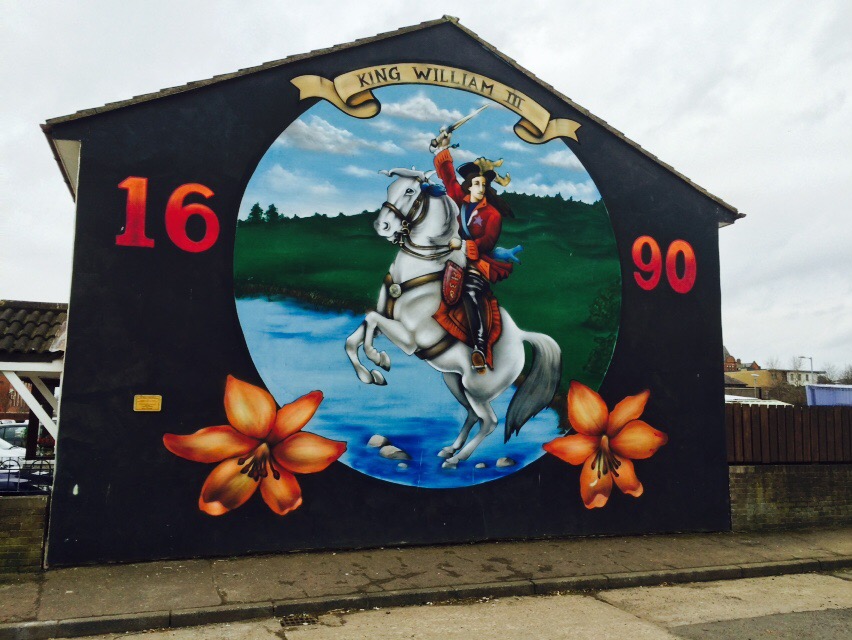
The most fascinating part of the tour is seeing the murals painted by both sides and learning about what they represent. We drove through the Protestant Shankill Road neighborhood first and then the Catholic Falls Road neighborhood, and in each one there were tons of murals painted on the sides of buildings and houses that reflect the symbols, messages, and heroes of each side. There are actually thousands of murals across Belfast, so what we saw was only a small portion. They seem to serve as reminders of historical/political/religious events connected to each side, as well as markers to identify “this is a Protestant or Catholic neighborhood (so beware if you’re from the other side)”
A lot of imagery on the Protestant side is of William of Orange, the Protestant king who defeated Catholic King James at the Battle of the Boyne in 1690 and thus cemented Protestant rule in Ireland for hundreds of years.


On the Catholic side, there’s a whole stretch of murals depicting perceived injustices from around the world (Nelson Mandela, Leonard Peltier, Gaza). Our guide explained that the Catholic side tends to support and identify with the “underdogs” in conflicts throughout the world, and so these murals reflect that.


And on both sides, there are murals of the heroes/martyrs. As our guide explained, a person that would be a hero on one side would be considered a terrorist on the other.

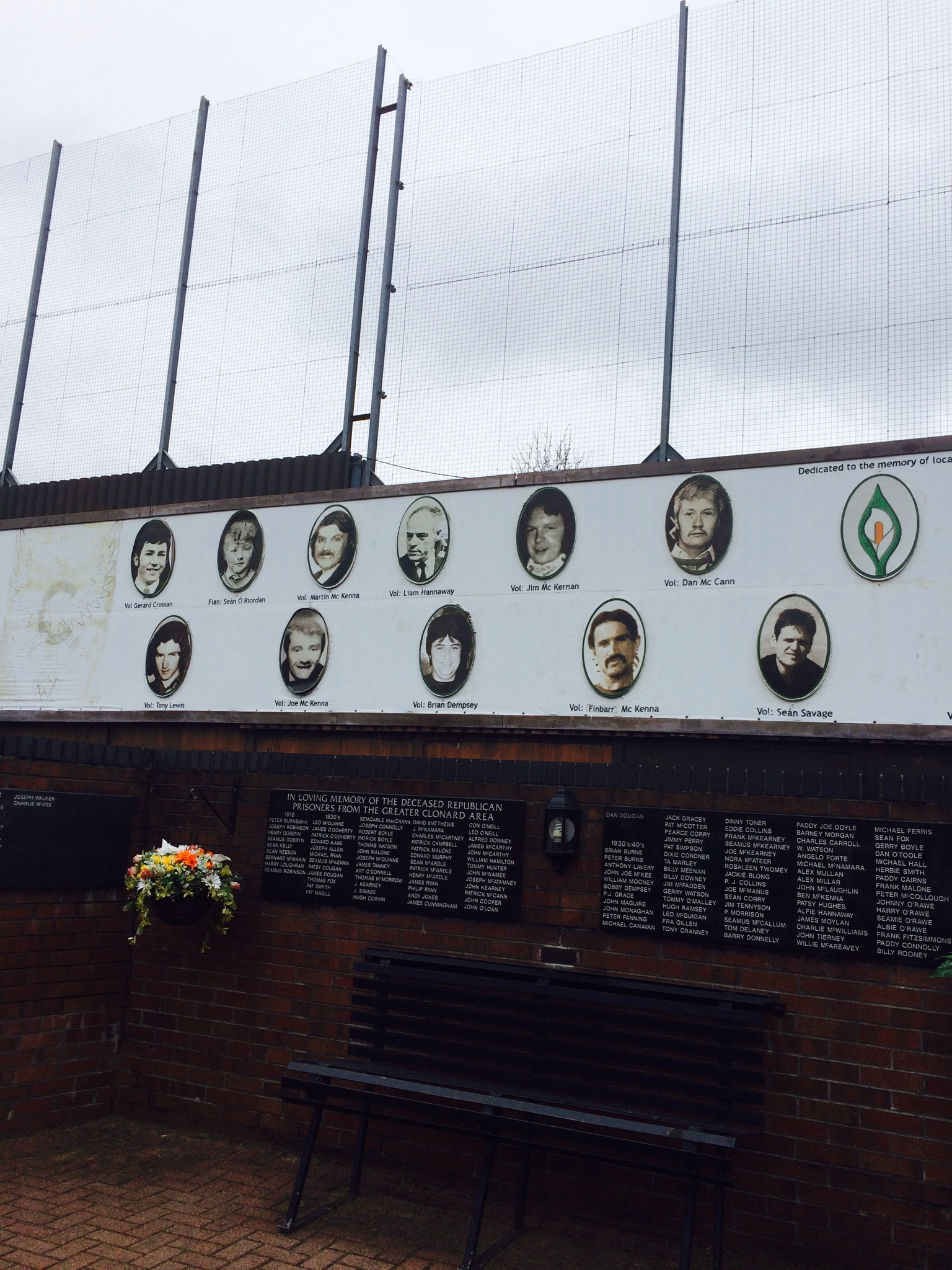


In between the two neighborhoods is what’s known as the “peace wall.” When I heard of this, I thought “oh cool, a wall commemorating and celebrating the peace forged between the two groups.” But in actuality, I would describe the wall as a security wall, that’s meant to “keep the peace” and keep violence at bay by separating the two groups, rather than a celebration of peace. Lots of people visit the peace wall and sign their names or write messages of hope and peace (as we did), but it’s definitely a different sort of place serving a different purpose than I initially thought. In addition to the wall, there are gates between the two communities — essentially checkpoints — that are closed each night to help prevent the groups from attacking each other.


So, as you can imagine, it was an intense few hours touring around these neighborhoods and learning about the Troubles. It’s clear that the tension and separation still very much exist, but as our guide explained, people seem to want peace given the alternative and now that they’ve seen a glimpse of what life can be like in a relatively peaceful and thriving Belfast.
We did see one commemoration of the resolution, which hopefully there can be even more of in the years to come.
Whew! Well there’s even more to write about our stay in Belfast, but I’ll stop there for now and continue a bit more later!

 dublingers
Love your posts. I need to read this one carefully. We had a teacher do an exchange there back in the mid nineties . He said it was so scary. Bombs every night. Glad it is now safer
Sent from my iPad
>
LikeLiked by 1 person
Thanks Auntie Linda! It was a very interesting place! That must have been so scary for your colleague to go there in the nineties!
Miss you!
LikeLike
Wow, you really summed that up well!
LikeLiked by 1 person
Thanks Wads! Part 2 coming soon!
LikeLike